Ancient Artifacts & Antiquities, May
Lot 416:
Mughal Period Gouache w/ Gold Detailing - Early 16th century to the Mid-19th Century
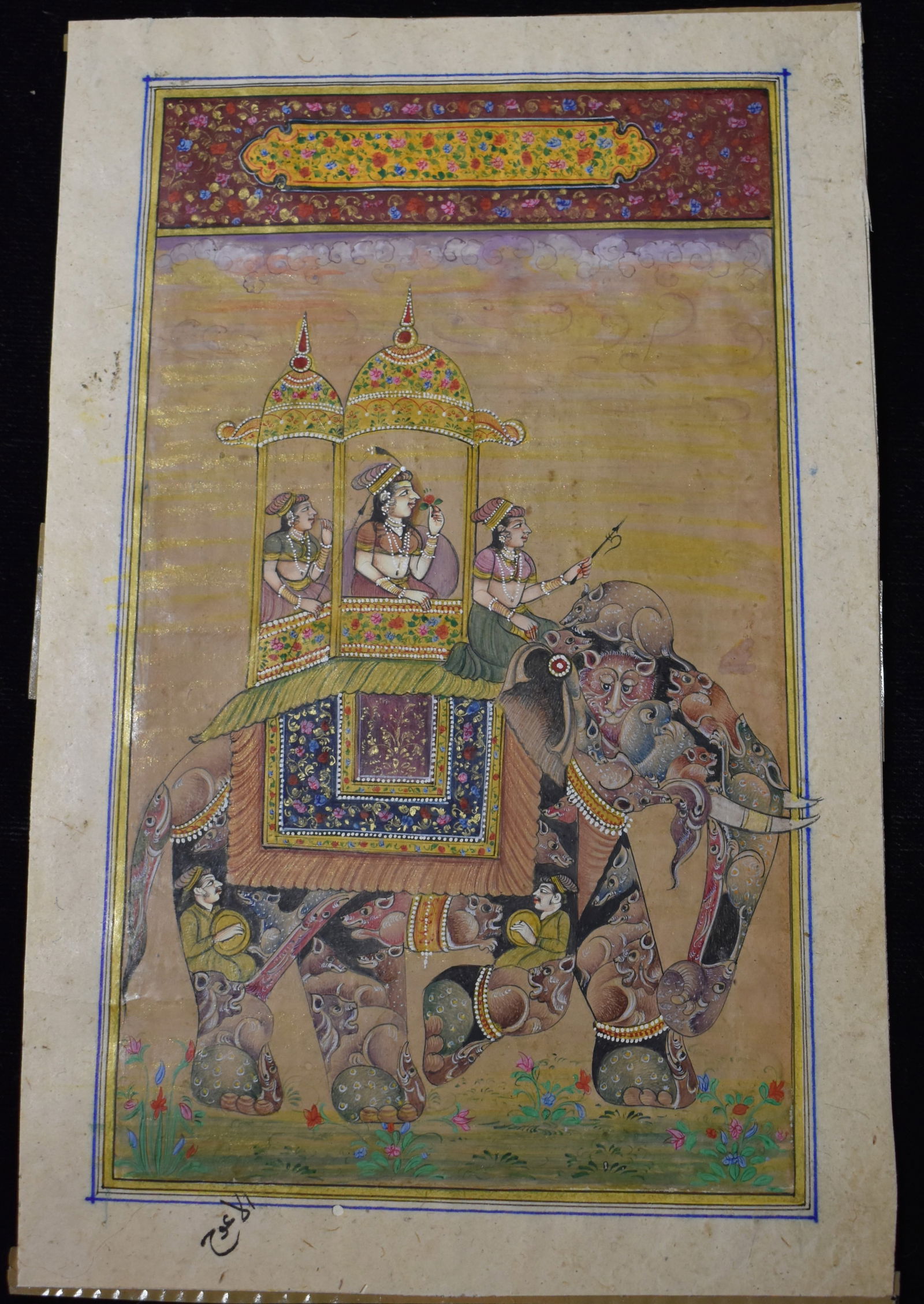
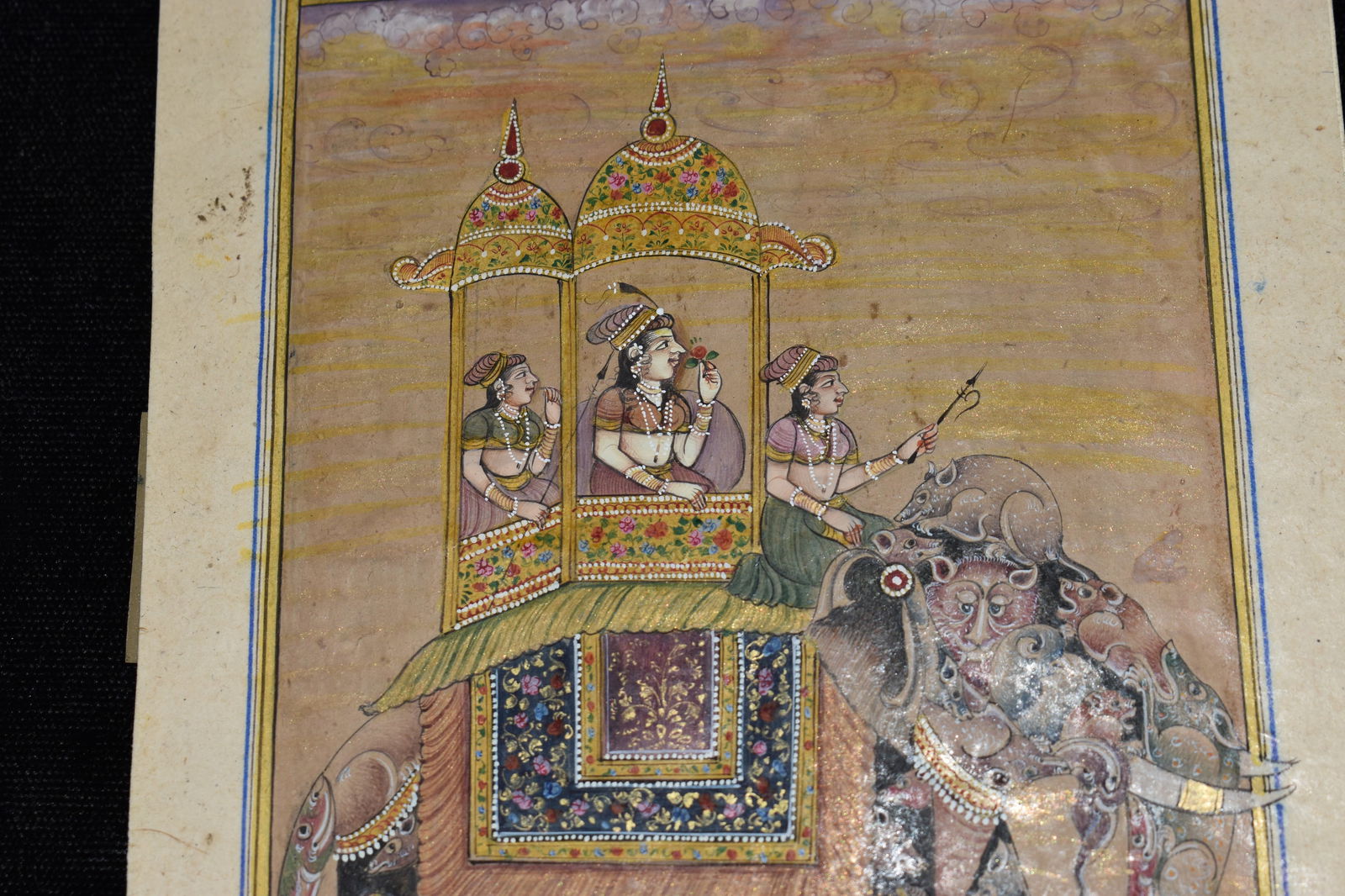
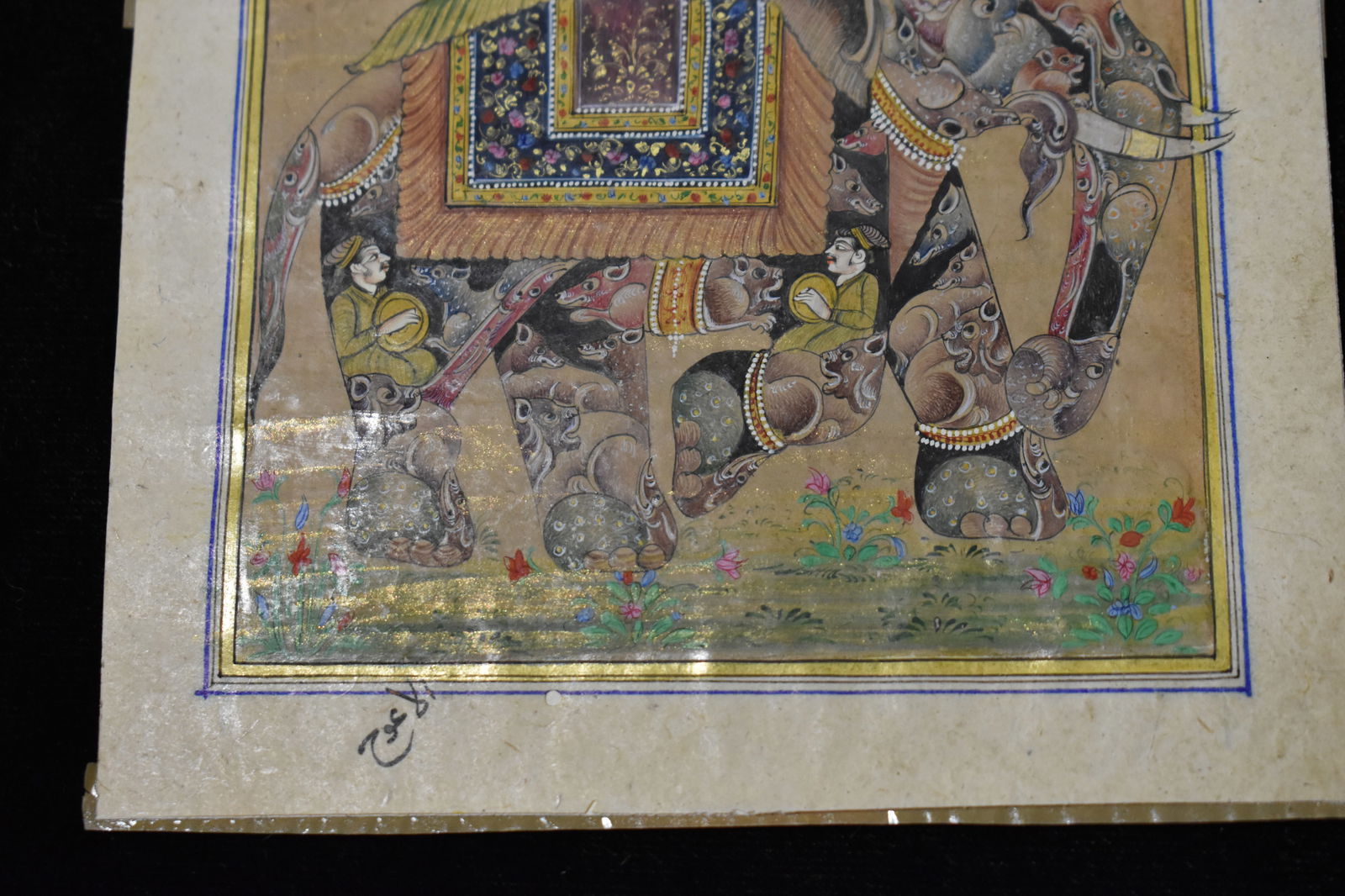
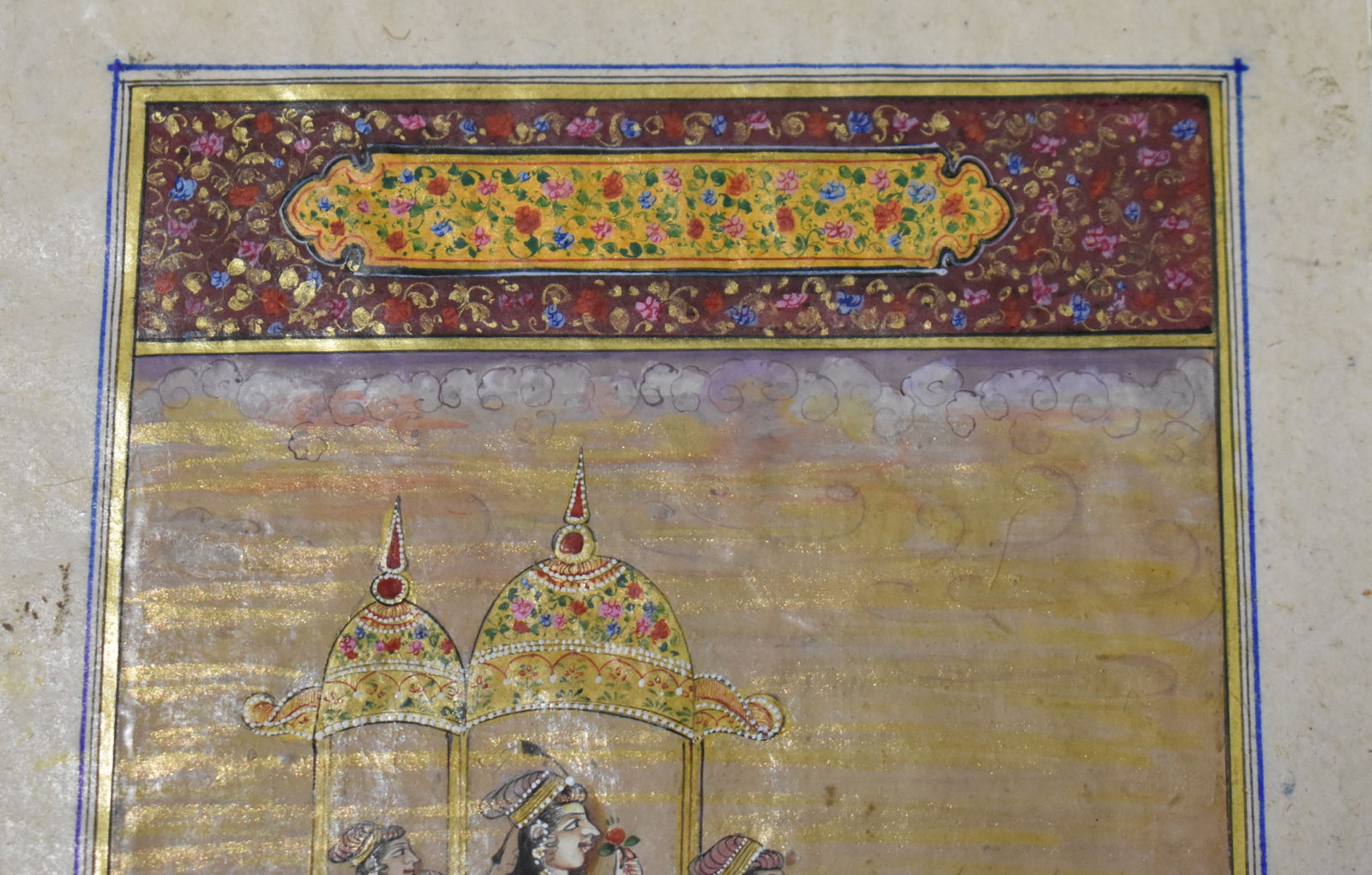
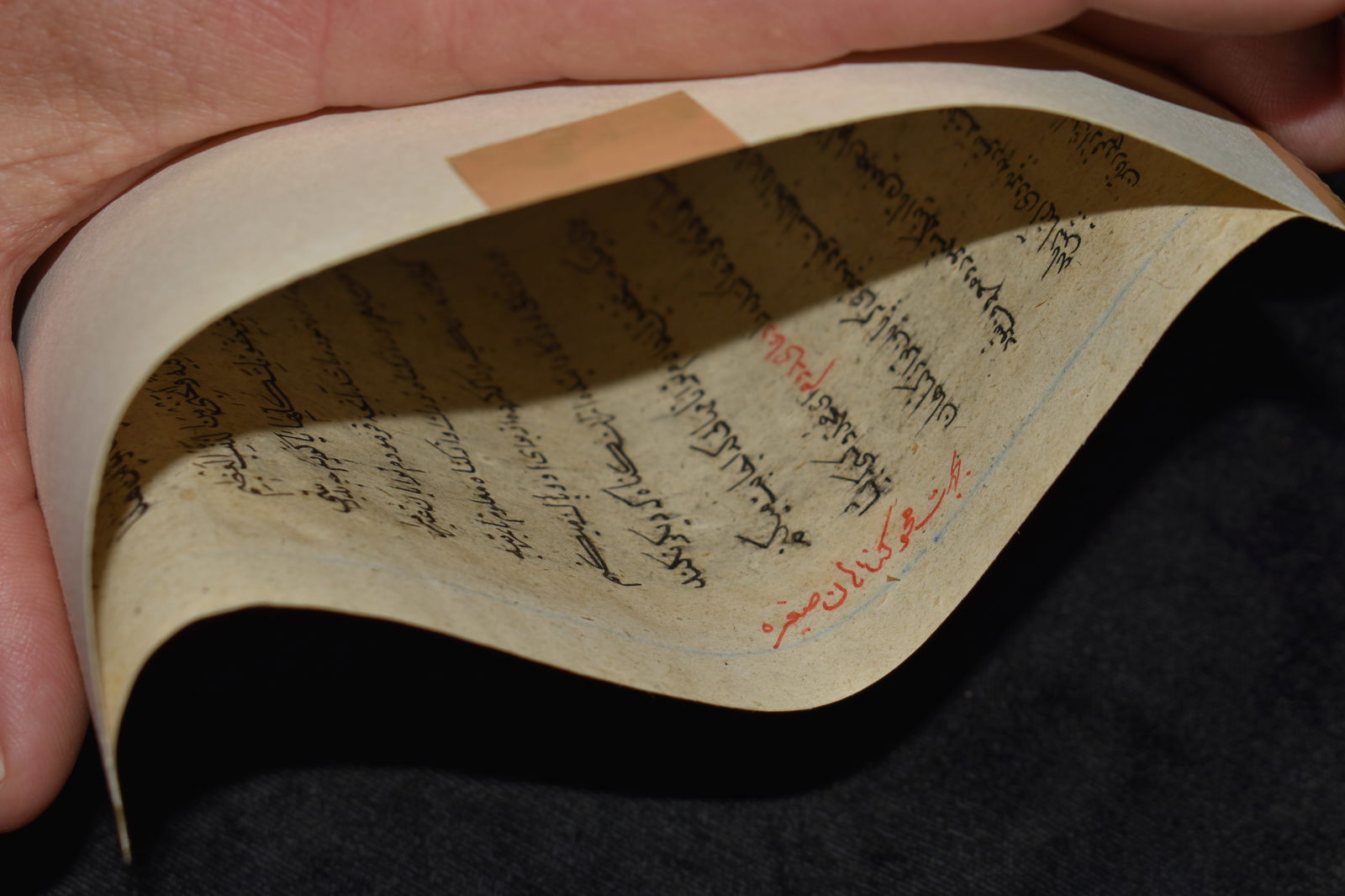
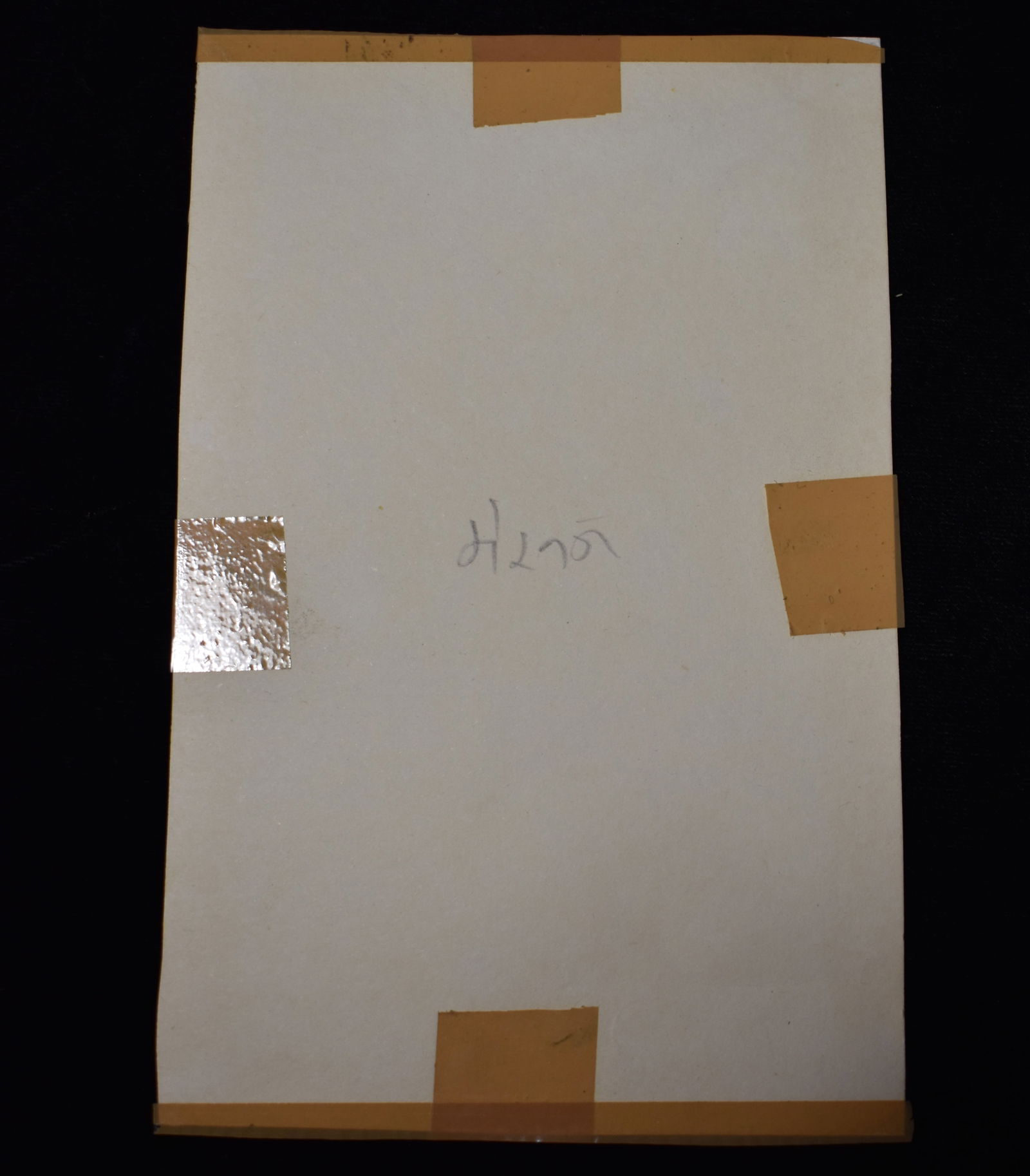
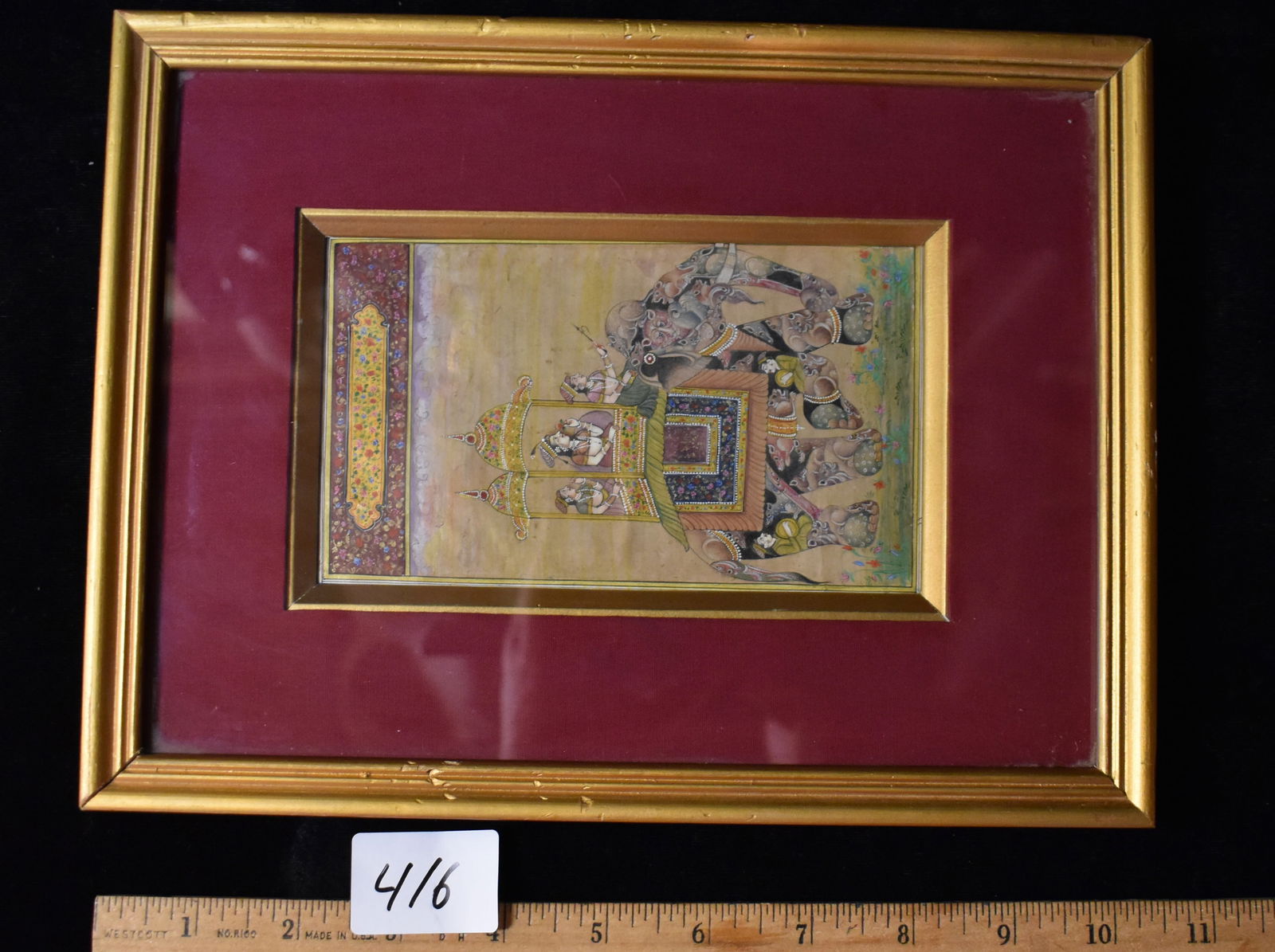
Mughal Period Gouache w/ Gold Detailing – Early 16th century to the Mid-19th Century. This painting depicts Emperor Shah Jahan with attendants in a howdah on an elaborately decorated elephant. This artwork is an excellent example of Mughal painting, known for its extreme detail. Removed from its frame to inspect revealed that this painting was done on what appears to be a book page. The back of the painting is in Arabic. This artwork is an excellent example of Mughal painting, known for its extreme detail. Material used for painting this piece is paper. We put the piece back in its original frame after inspection and photos. This is a piece from the Chuck and Eileen Hoffman collection. While teaching in India Chuck gathered several older artistic pieces from the cultures past and present of the area. The frame measures 10 1/4" by 7 3/4". The painting measures 6" by 3 3/8" plus any boarders that are not visible from the framing. Elephants were often associated with power, majesty, and royal authority in Mughal culture. This painting is likely of the wives of Shah Jahan riding an elephant. There are similar paintings showing Shah Jahan with attendants. This was the only example we found with women riding. Shah Jahan, known for his architectural marvels like the Taj Mahal, is portrayed in this artwork to emphasize his imperial stature and control over nature and his kingdom. Such paintings often served as visual representations of the emperor’s might and the harmony of his reign. They were also a way to document significant events or ceremonial occasions. The intricate details in the artwork, including the adornments on the elephant and Shah Jahan’s regal attire, highlight the opulence and artistic excellence of the Mughal court. This piece might also symbolize the emperor’s connection to the divine, as elephants were considered auspicious and sacred in many traditions. The artwork is not just a depiction of a scene but a narrative of power, culture, and artistry during Shah Jahan’s reign.
Condition: Authentic
Share this lot: