Exceptional Artifact & Collectible Auction
Lot 210:
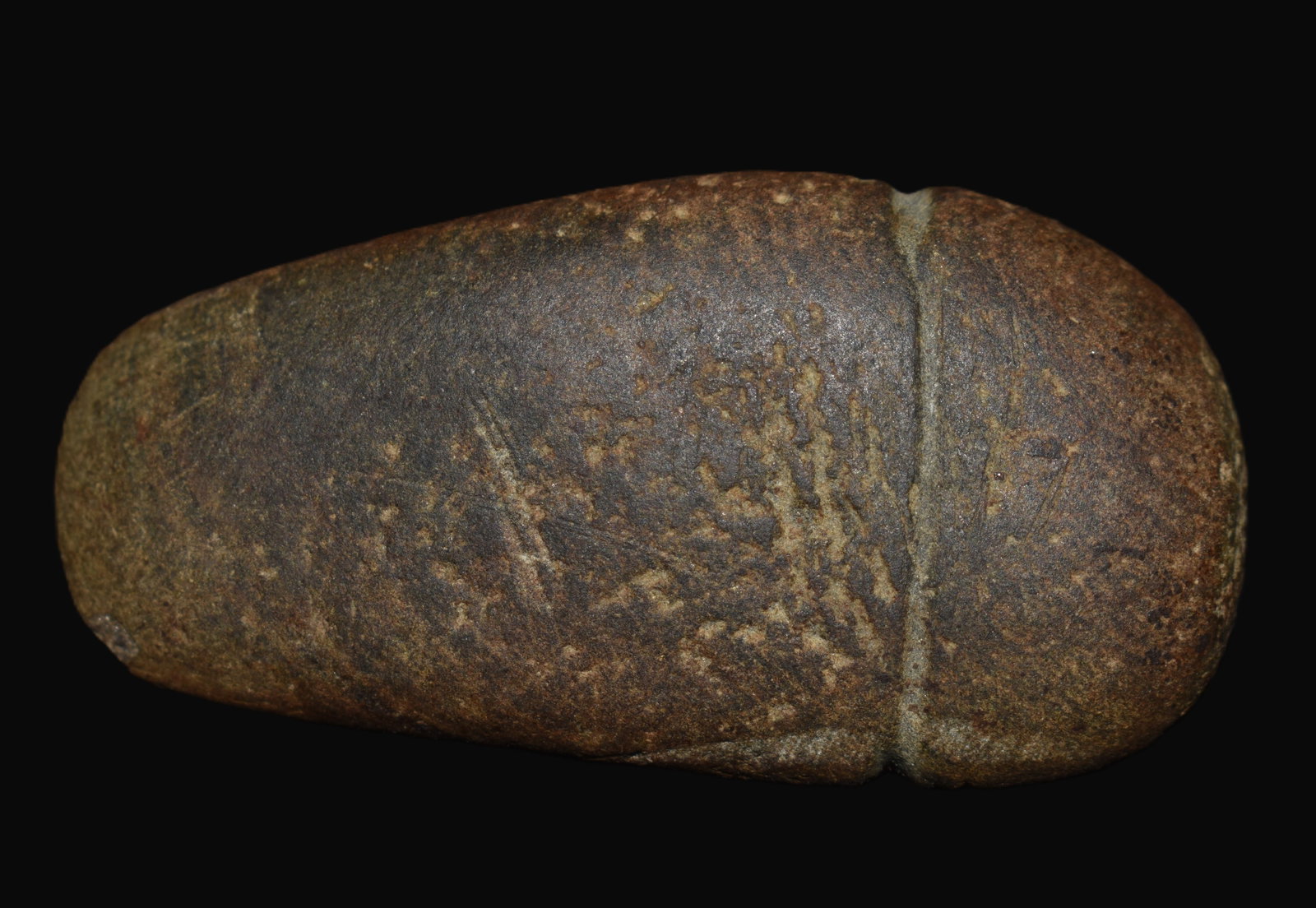
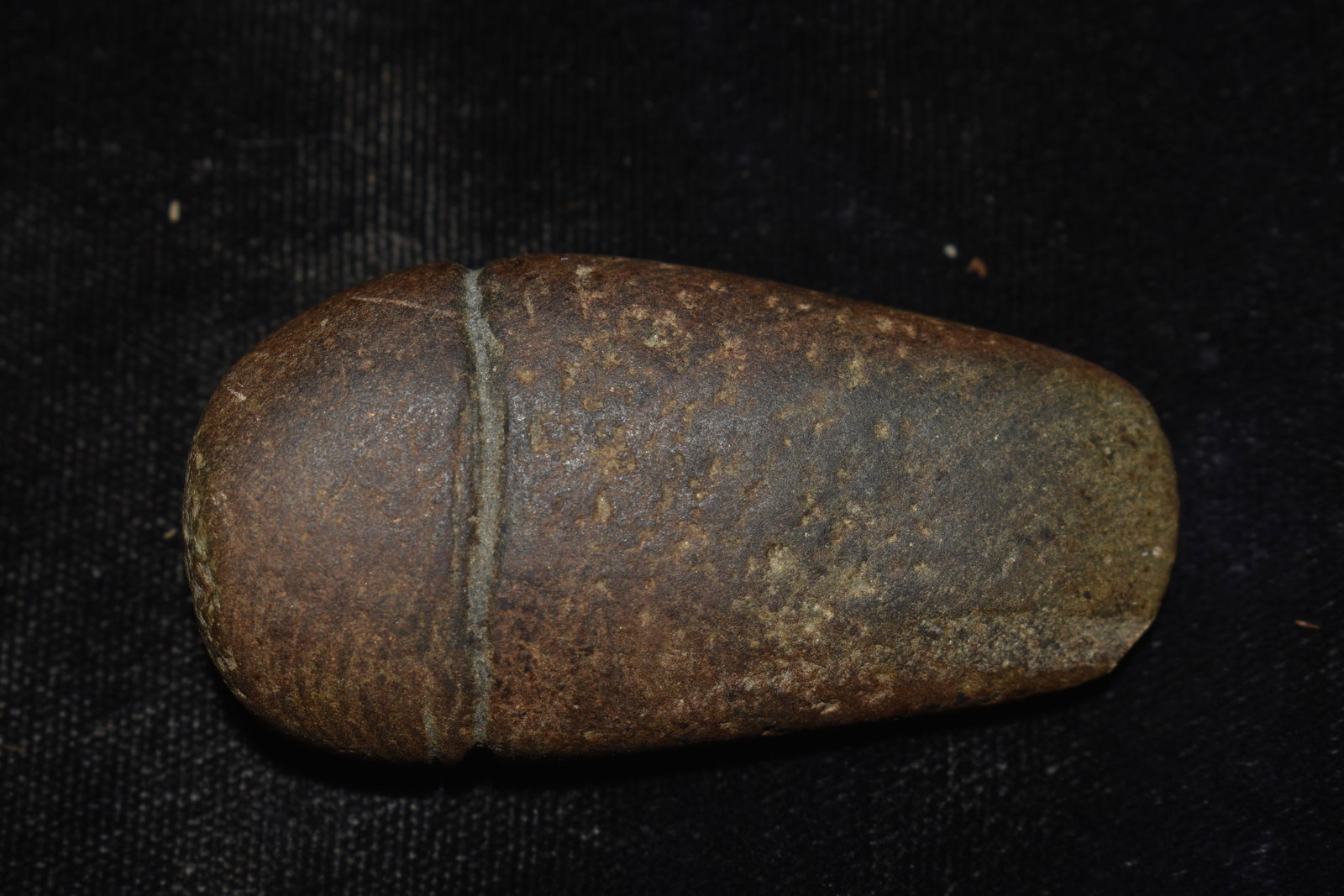
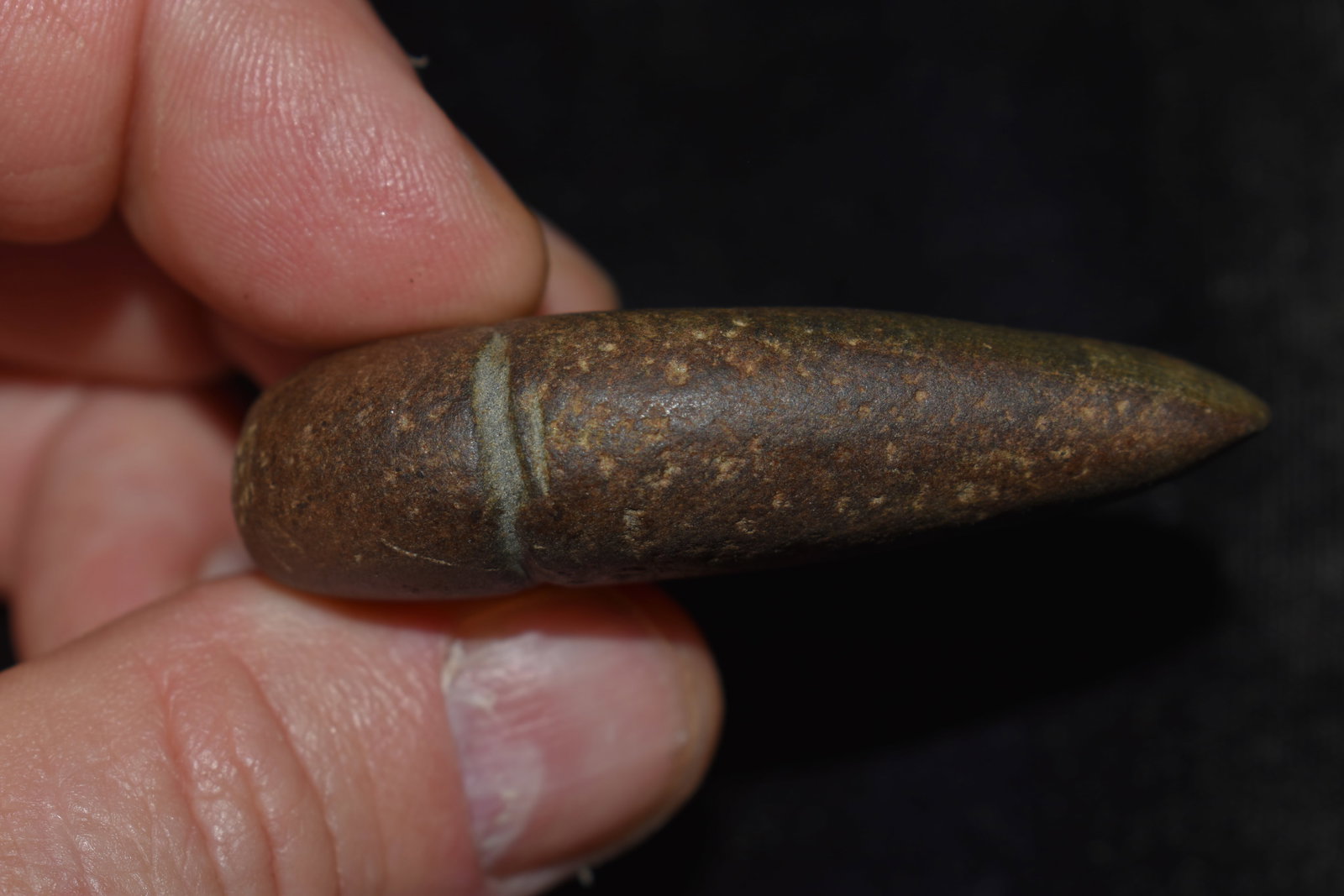
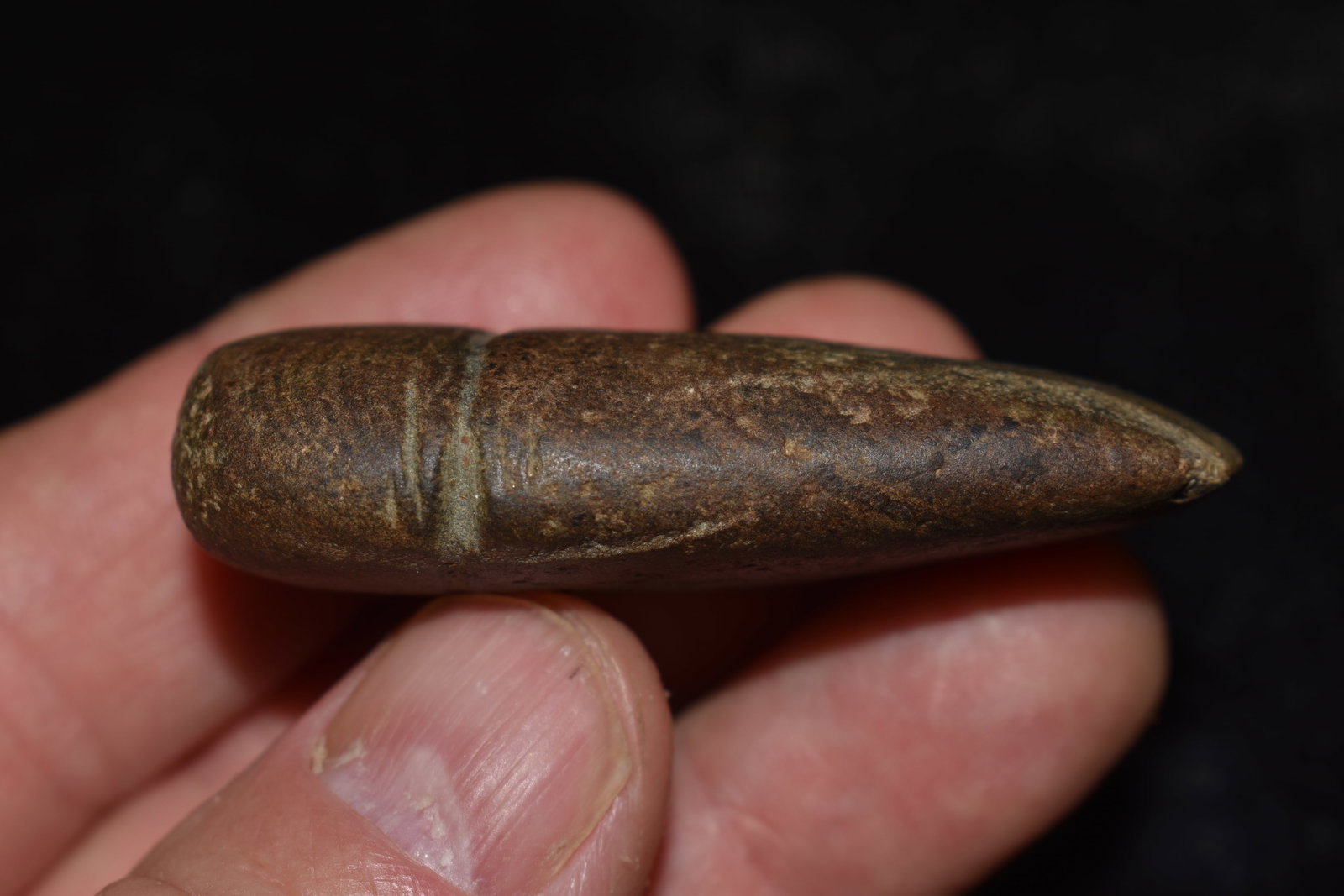
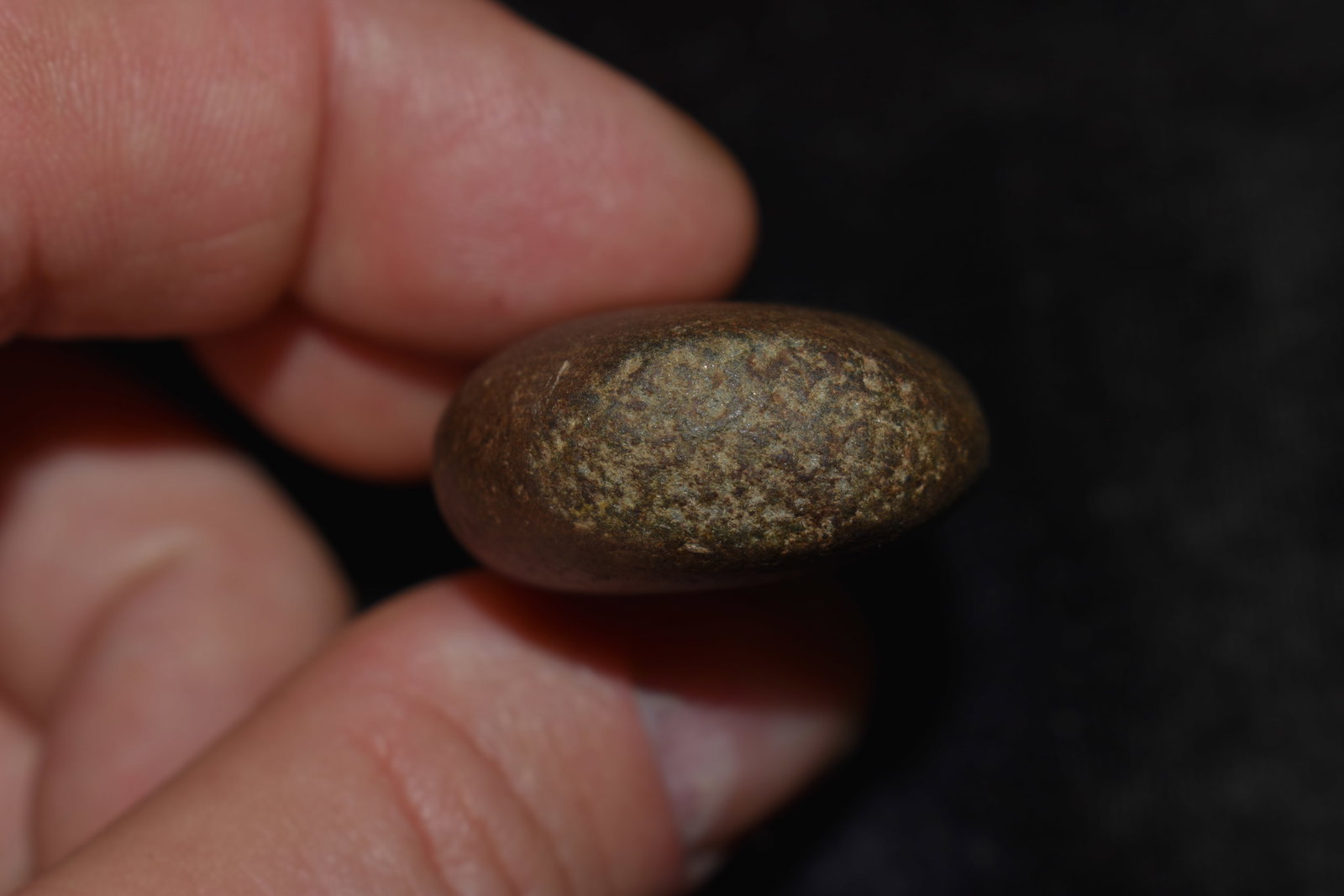
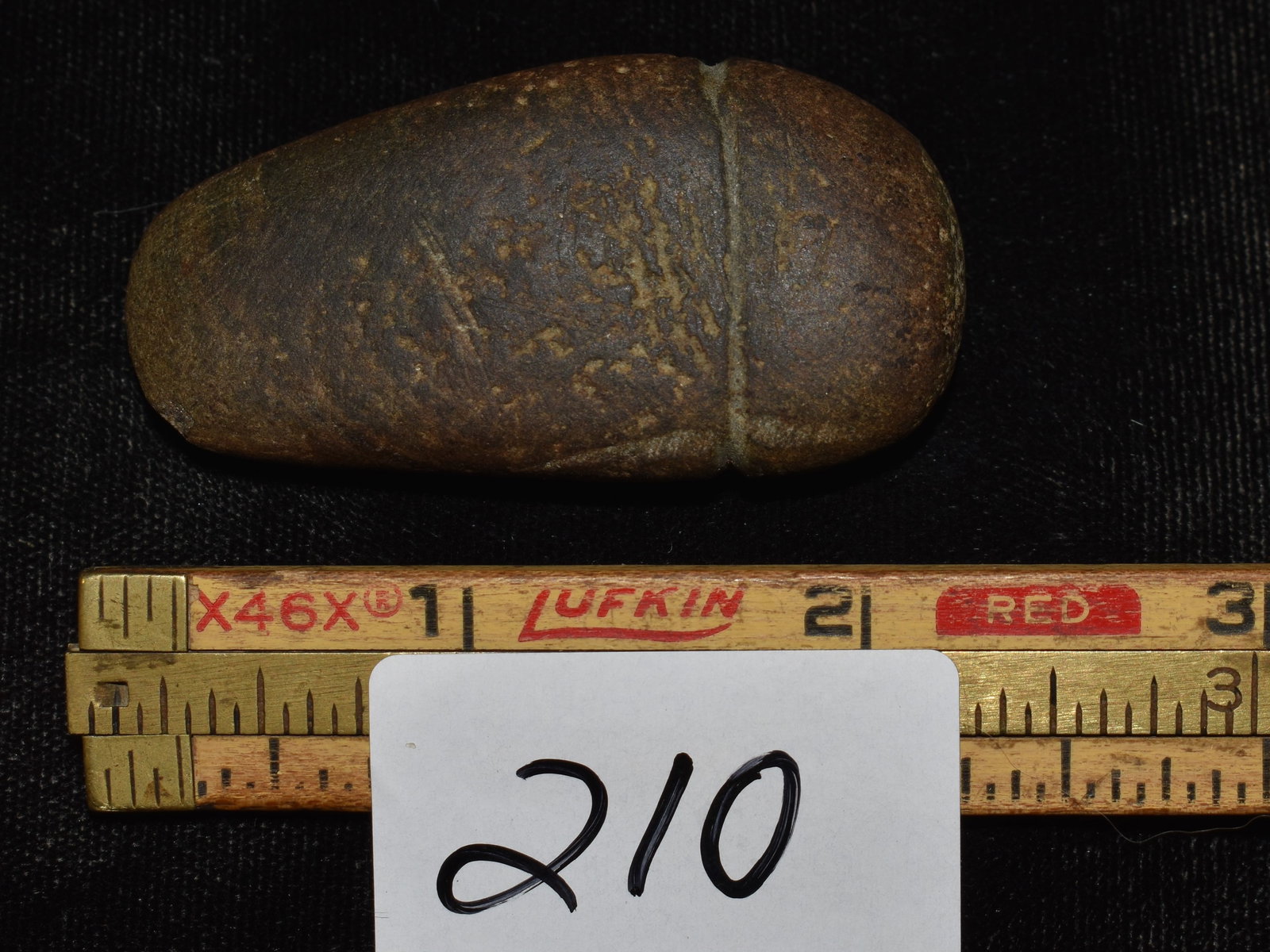
2 1/16" Rare Miniature Grooved Adzelet found in Fulton County, Illinois
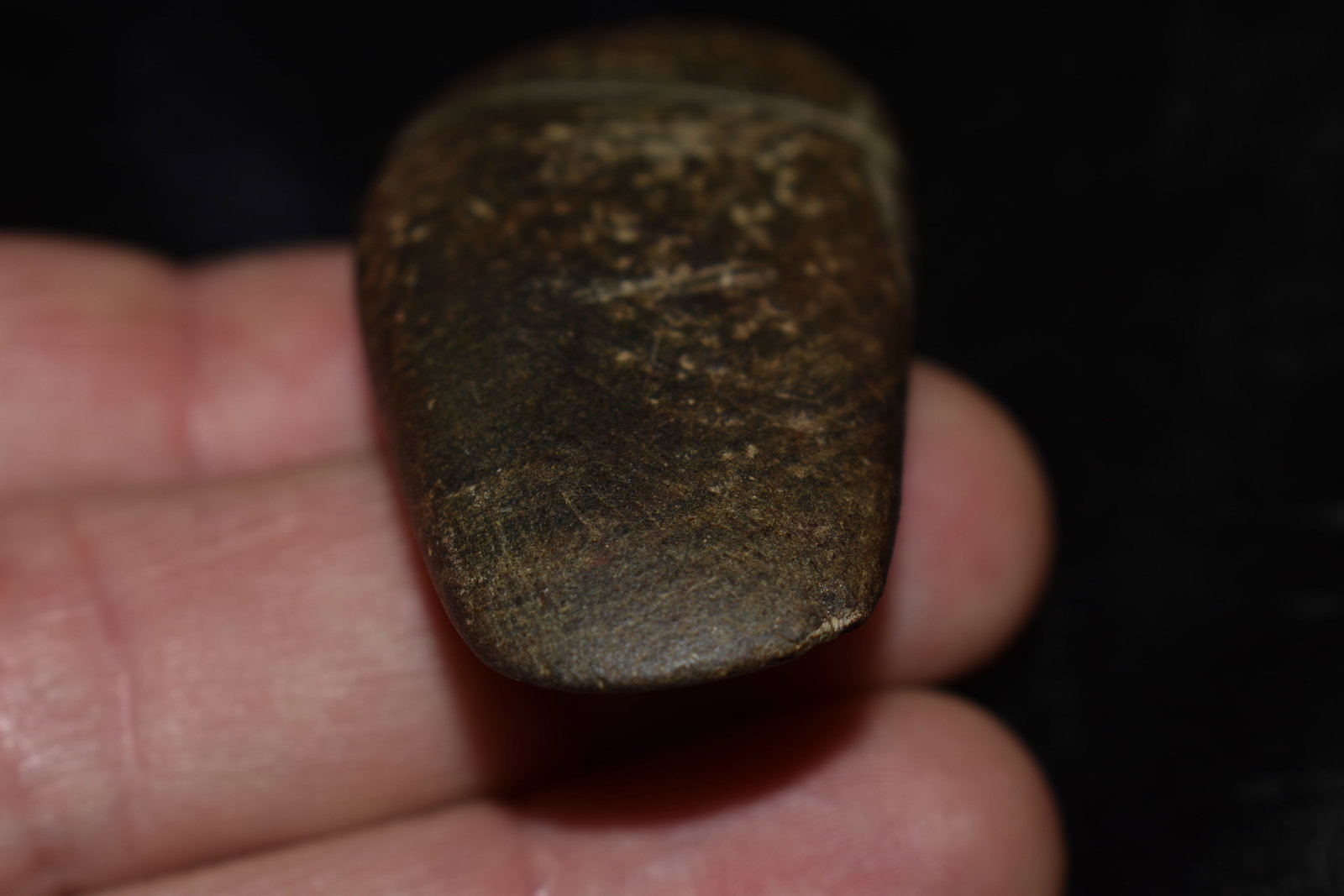
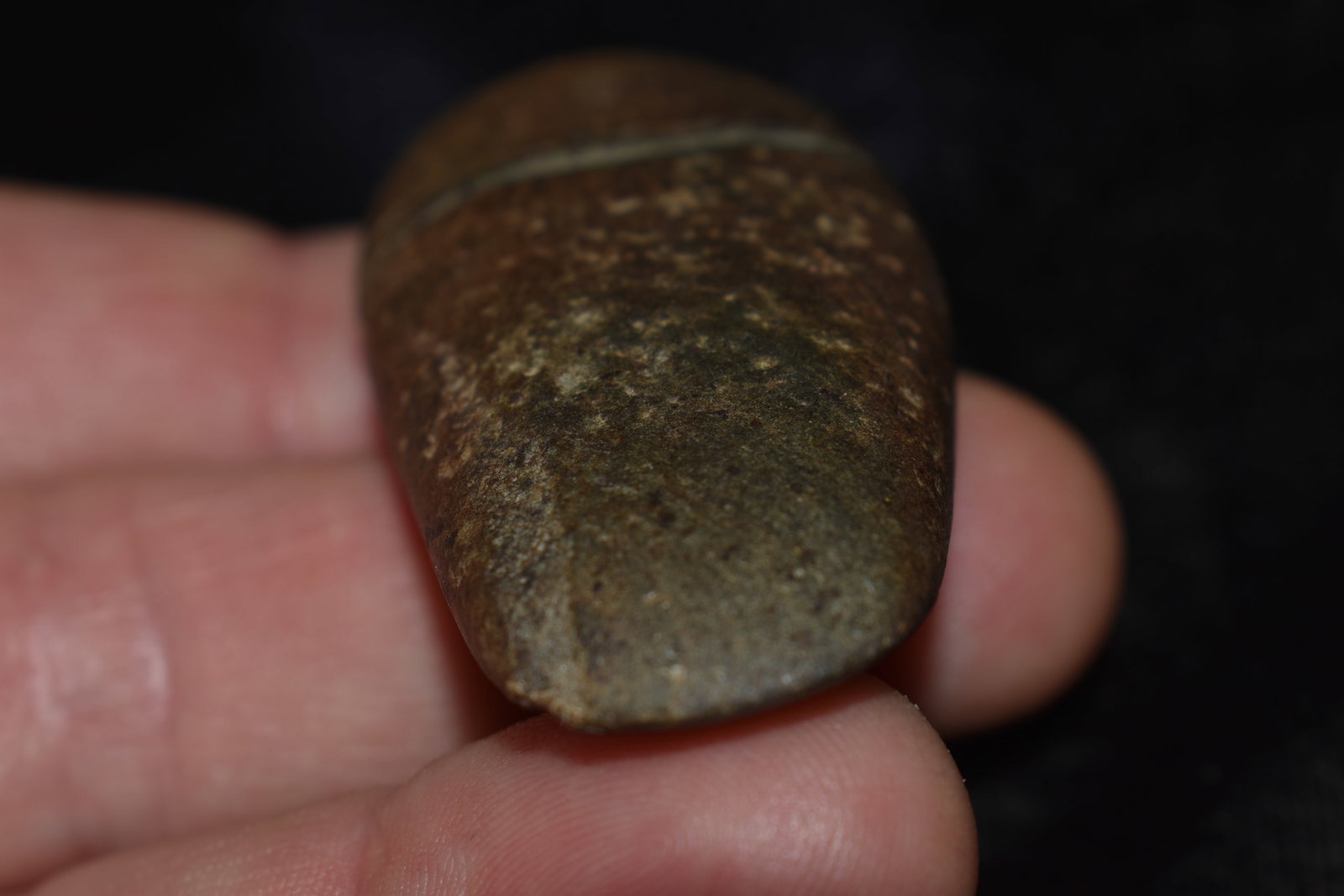
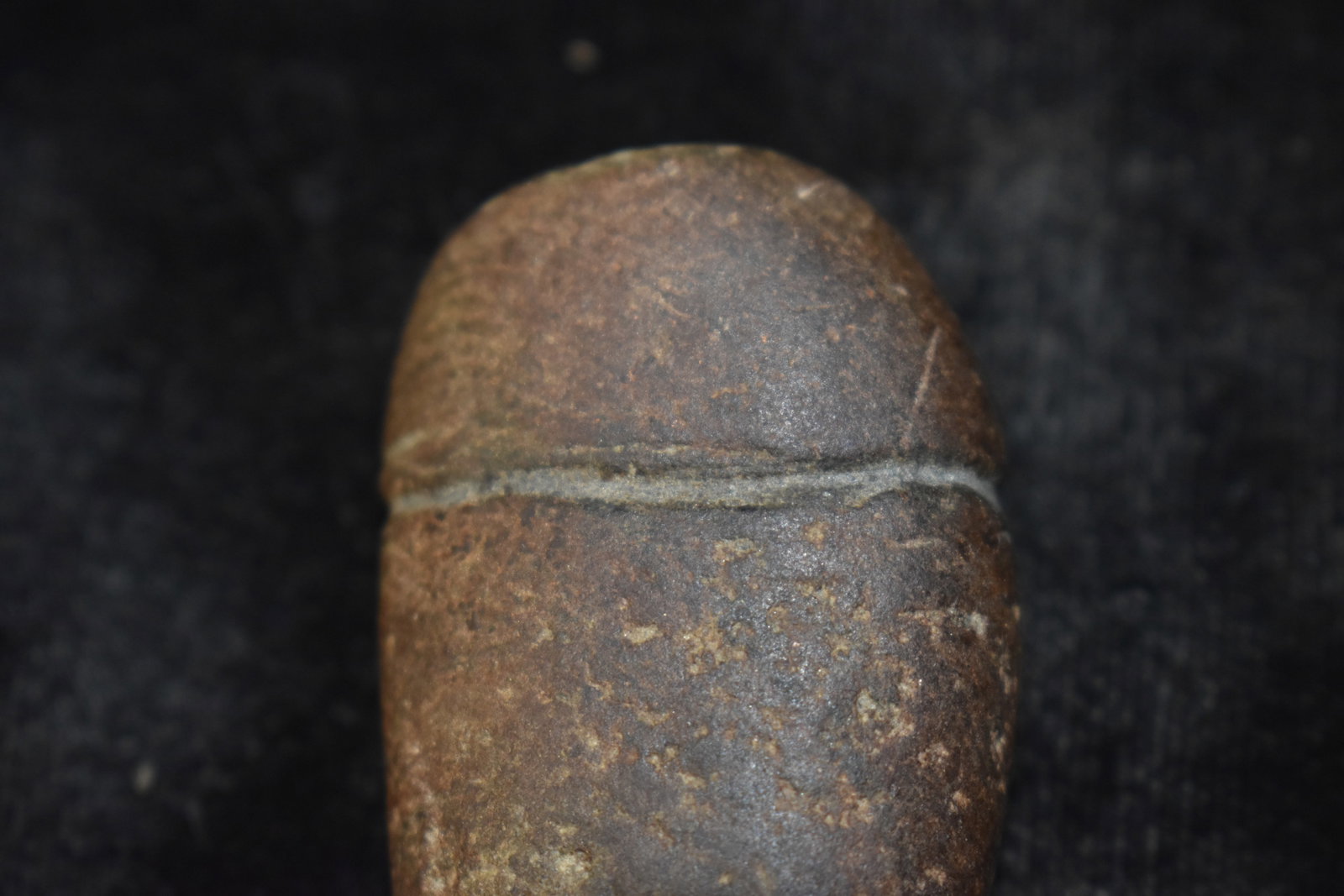
This finely crafted miniature grooved stone tool measures approximately 2 1/16 inches and was found in Fulton County, Illinois. Shaped from a dense fine grained igneous stone consistent with basalt or diabase, the piece displays a carefully executed encircling groove and a deliberately formed bit, both produced through controlled prehistoric workmanship rather than natural processes. While patination is lighter than on heavily weathered examples, the surface shows the soft aged texture and mineral settling expected of an authentically ancient artifact.
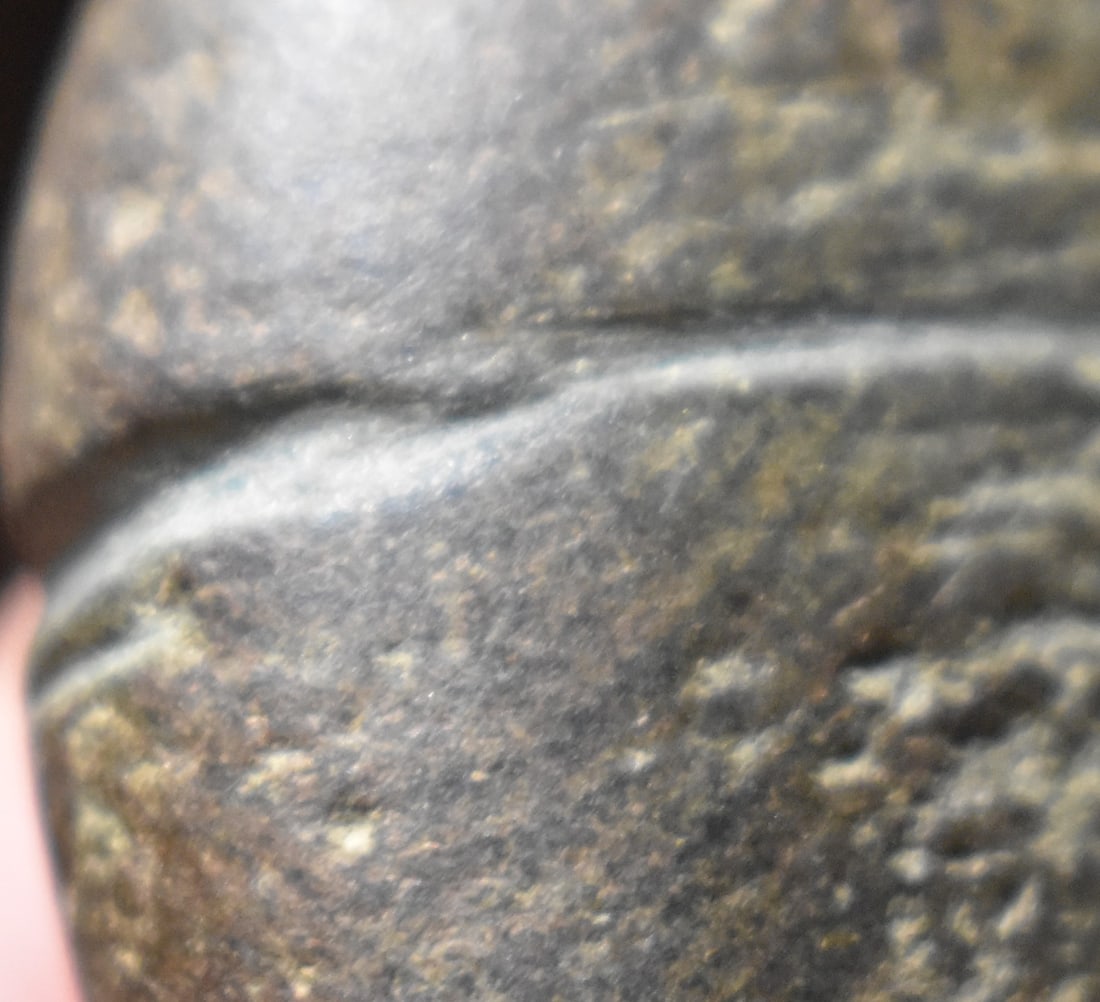
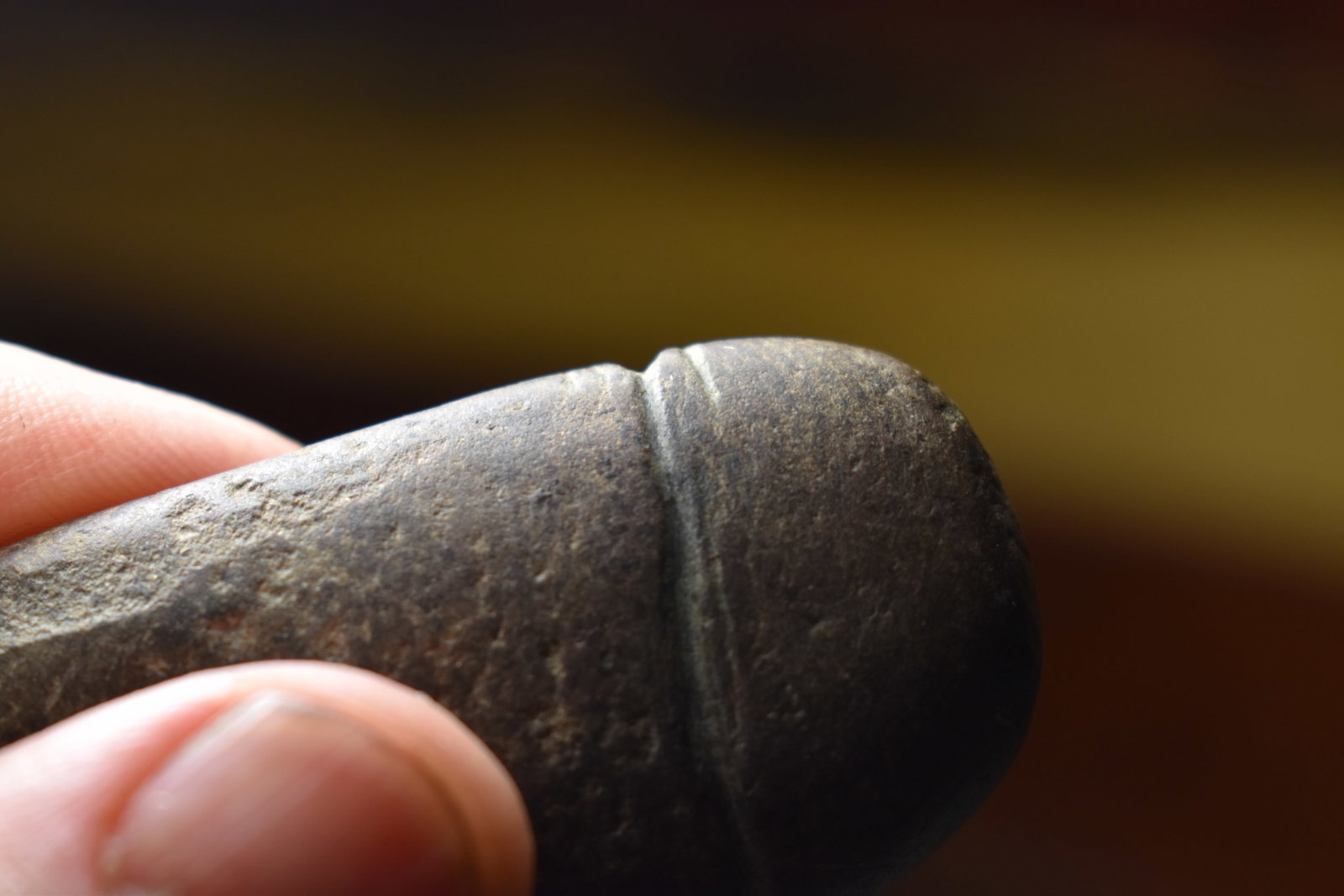
The narrow well defined groove was created through point pecking followed by grit abrasion, the standard prehistoric method for shaping hard stone. Pecking produced thousands of tiny impact pits along a marked line, which were then smoothed by rubbing abrasive grit under pressure, leaving the fine irregular linear marks characteristic of ancient manufacture. Scattered cut like lines inside and just outside the groove are normal results of grit movement and hand motion and are fully consistent with prehistoric workmanship.
Despite its small size, the groove was fully functional and designed for hafting rather than suspension. The tool would have been seated into a small split stick or antler socket, with the pecked butt providing grip inside the split. Rawhide or sinew was wrapped tightly across the groove so the lashing could bite against the recessed shoulder, shrinking as it dried to lock the stone securely in place. This method is well documented on miniature grooved implements and aligns precisely with the form and workmanship seen here.
Comparable miniature grooved tools have been documented across the Midwest and Eastern Woodlands, particularly in Illinois, Missouri, Iowa, Indiana, Kentucky, and Tennessee. These small hafted implements appear in both Archaic and Early Woodland contexts and are associated with light woodworking, hide processing, and fine carving tasks. Archaeological collections from the central Mississippi Valley and lower Ohio Valley include similarly sized grooved adzelets and small cobble based tools featuring narrow functional grooves and pecked butts nearly identical to this example.
The bit end is intentionally shaped and rounded, showing controlled pecking rather than natural fracture, and the butt is likewise hand pecked. Based on its form, groove style, and regional parallels, this example most likely dates to the Late Archaic to Early Woodland period, approximately 3000 to 1500 BP.
Condition is excellent. The groove, bit, and butt all show genuine prehistoric workmanship with no evidence of modern cutting, grinding, or enhancement. Surface texture is consistent with age, and the lighter patination is appropriate for a piece likely buried in stable soil rather than exposed to heavy river tumbling. Minor surface lines represent later incidental contact rather than modern tool work.
This artifact exhibits all diagnostic traits of a genuine prehistoric miniature grooved tool, including its narrow pecked groove, shaped bit, hand pecked butt, and irregular micro striations produced by ancient grit abrasion. Although the groove displays lighter patination than the bit and high poles of the piece, this contrast is entirely consistent with authentic prehistoric manufacture. The exterior surfaces developed patina over a long period of natural exposure and burial, while the groove was carved later in the stone’s life, cutting through the older weathered rind and exposing fresher interior material. Recessed areas naturally patinate more slowly than exposed surfaces, producing the uneven patination pattern well documented on authentic ancient grooved tools.
With its Fulton County find location, strong provenance, and well preserved ancient workmanship, this is a desirable and uncommon example of a miniature grooved implement.
Provenance: Ex: Chuck Asher Collection; Found in Fulton County, Illinois.
Condition: Authentic
Share this lot: